Design and installation on a 150ft superyacht
Superyachts are not static environments. Designing a high-performance training space aboard one requires careful thinking about movement, weight distribution, access and the realities of operating at sea.
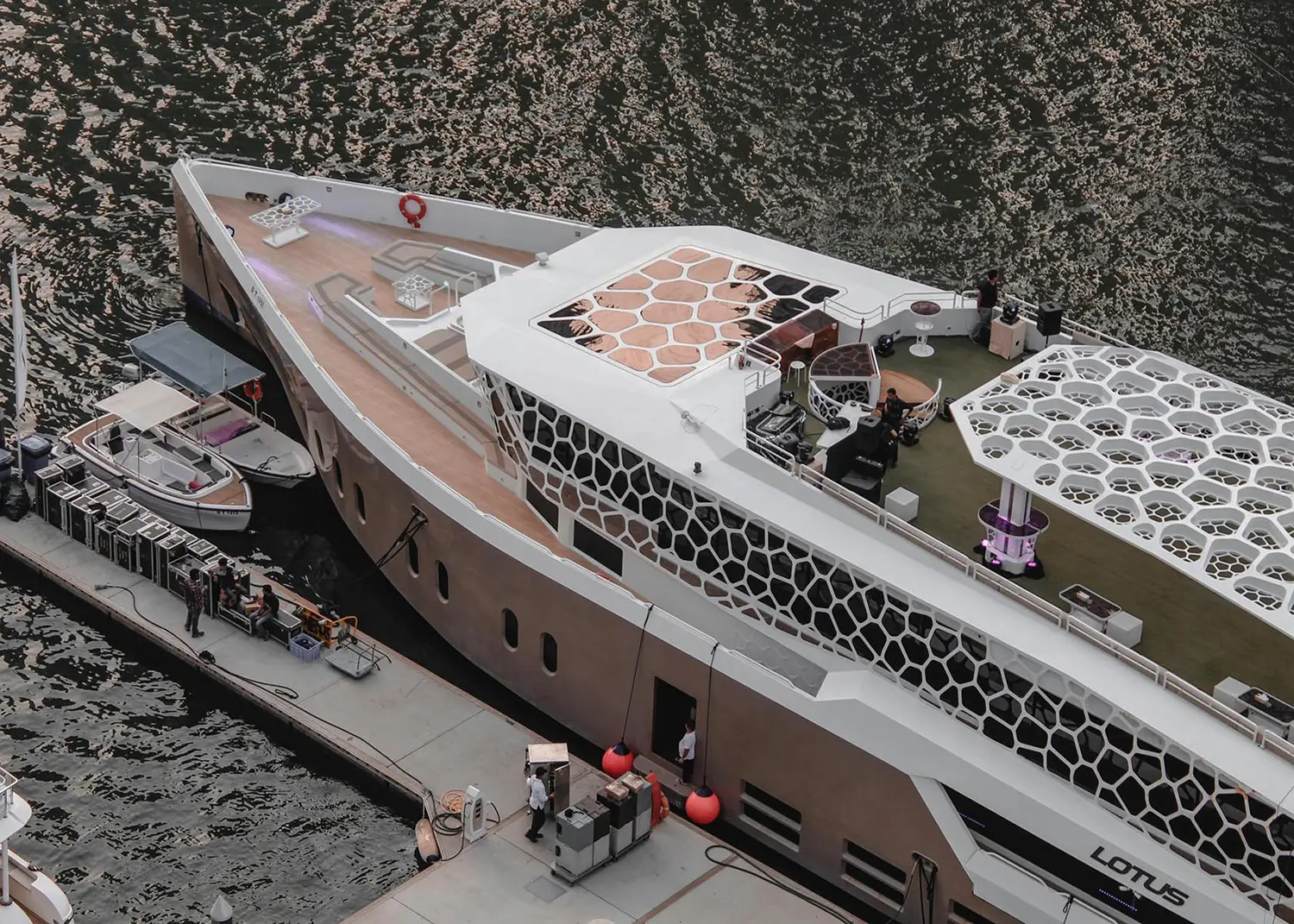
A superyacht is one of the most demanding environments you can ask a gym to exist in. Space is finite, ceilings are low, access routes are narrow and every kilogram placed on board has structural consequences. The vessel moves. The client does not lower their expectations because of it.
Swiss Strength was commissioned to design and install a fully operational, high-performance training space aboard a 150ft private superyacht. The project required us to work alongside the boat owner, project managers and shipbuilders, coordinating every stage from initial specification through to final installation.
A floating gym is an engineering problem first
Laying out a training space on land involves constraints. Laying one out on a vessel at sea involves physics. Equipment placement must account for the movement of the boat, which means clearances that would be adequate on shore become inadequate the moment the hull begins to roll. Machine selection has to be rethought from first principles. Even something as straightforward as dumbells requires consideration: hexagonal rather than round, so they stay where you put them when the sea decides it has other ideas.
Weight distribution carries structural implications that a shipbuilder has to approve. Ceiling heights vary across different sections of the vessel, narrowing the range of viable equipment in ways a catalogue specification simply cannot accommodate. Every decision feeds into the next. The layout that looks balanced on a drawing has to remain balanced at five degrees of heel.
Getting the equipment onboard
Access to a superyacht gym is rarely straightforward. Corridors are designed for people, not commercial training equipment, and build schedules leave limited windows for installation alongside multiple contractors working in parallel.
Swiss Strength planned the delivery and installation methodology in full before a single piece of equipment moved. Access strategy, lifting operations, floor protection, RAMS documentation: each stage was prepared in advance so that the installation itself could proceed cleanly and without disruption to the wider build programme. Where equipment required modification or partial disassembly to navigate the vessel's access routes, that was incorporated into the plan before it became a problem on site.
Performing under real conditions
The standard a superyacht client holds their training space to is the same standard they hold everything else aboard the vessel. That means the finished environment has to feel considered and complete, with performance that doesn't degrade when the anchorage is anything less than flat calm.
Achieving that requires the kind of careful, environment-specific thinking that goes well beyond selecting premium equipment and hoping for the best. Layouts were engineered for usability under movement. Every specification decision was weighed against the realities of the marine environment. The result was a training space that functions precisely as intended, whether the vessel is at anchor or underway, and that sits within the overall aesthetic of the yacht as though it was always supposed to be there.
What this project required
Superyacht installations demand close collaboration with shipbuilders and project teams from the earliest stages of planning. The later Swiss Strength is brought into a project, the narrower the range of available solutions. Where we are involved from the outset, structural considerations, equipment suitability and spatial planning can be resolved as design decisions rather than as last-minute problems.
The 150ft project was delivered on schedule, to the specification agreed and without compromise to the vessel or the finish. That outcome was a function of how it was planned, not simply how it was executed.